
Unity, not division, is needed to save the nation
Bangladesh News Desk
Published:07 Jul 2026, 04:58 AM
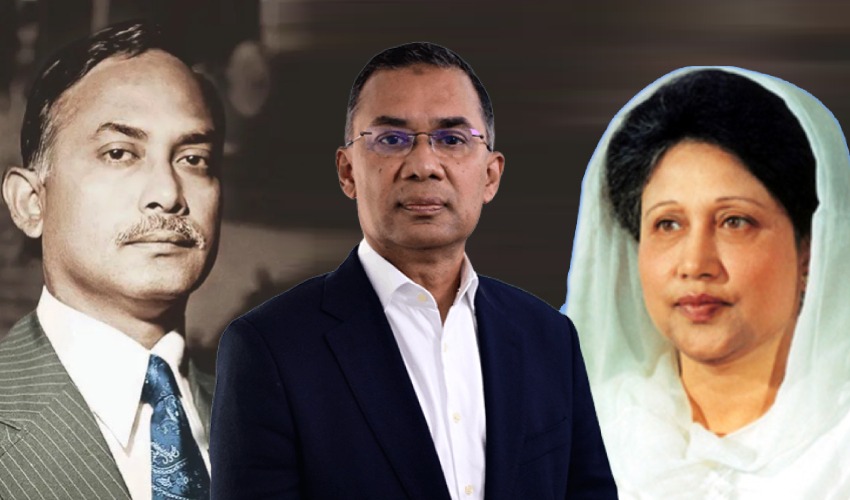
Unity, not division, is needed to save the nation
In his address as the chief guest at the July National Convention held last Saturday to mark the mourning
and victory anniversary of the July-August Mass Uprising, Prime Minister Tarique Rahman said, “Not
revenge; we must move the country forward through unity.”
This is not the first time that Prime Minister Tarique Rahman has made such a call since assuming office.
Over the past five months, he has repeatedly urged the nation to unite in rebuilding Bangladesh, both
inside and outside Parliament. His remarks are not merely rhetorical. Within this short period, he has
actively worked to foster an atmosphere of political unity across the country. As Leader of the House,
several initiatives taken by Tarique Rahman to ensure that both the ruling and opposition parties work
together in Parliament have been widely appreciated. However, while the Prime Minister has sincerely
extended his hand in the spirit of national unity, the question remains: is everyone responding in the
same way?
The long-awaited restoration of democracy in Bangladesh has finally been achieved through a free and
fair election. Yet the country remains wounded and stands on the brink of ruin. Fifteen years of
corruption, plundering and one-party rule had already left Bangladesh in a fragile state. Following the
events of 5 August 2024, the eighteen-month rule of the interim government led by Dr Yunus pushed
the country into an even deeper crisis.
The economy is now in a severely weakened state. Unemployment has risen alarmingly. The
economically damaging policies pursued by the Yunus government caused the private sector to collapse.
Thousands of factories have shut down, while new investment has virtually disappeared. At the same
time, ordinary people continue to struggle under the burden of soaring prices and persistently high
inflation.
Social life has also been marked by instability. The wave of mob violence that spread during the Yunus
administration has yet to be fully eradicated. Crimes such as mugging and extortion continue to spread
fear among the public, while law and order have not returned to normal. The scars of the Yunus
government’s misrule are visible across every sector, including education and healthcare. To rescue the
nation from this state of decline, there is no alternative to national unity. The government alone cannot
resolve these problems overnight. Doing so requires collective effort, mutual cooperation and political
stability from all sections of society.
The central aspiration of the 2024 Mass Uprising was a united Bangladesh. Breaking free from division,
conflict, discrimination and revenge, people took to the streets in the hope of building a freer and more
democratic nation. They believed that, following the fall of the Awami League, citizens would be able to
express their views freely, freedom of speech would be protected, and no one would be persecuted for
holding dissenting opinions. They hoped oppression would end and the rule of law would be firmly
established.
A historic opportunity had emerged for the interim government to unite the nation. Instead, the Yunus
government deepened existing divisions. Corruption and looting resumed, while Dr Yunus, according to
critics, gave rise to a new plundering fascist force. The election of 12 February has now created an
opportunity to put the country back on the right path. To achieve this, cooperation and responsible
conduct are required from every quarter.
The historical experience of Bangladesh suggests that whenever the nation has lost its way or become
trapped in deep political division, the Zia family has stepped forward to restore unity and provide
national leadership.
Following the events of 1975, Bangladesh became deeply fragmented. Chaos engulfed the country, and
it stood on the verge of civil war, facing an existential crisis. At that critical moment, Shaheed President
Ziaur Rahman assumed the leadership of the nation. He united a helpless and confused people and
introduced multi-party democracy, creating a political system that accommodated diverse viewpoints.
By freeing the country from the constraints of a socialist economy, he introduced a free-market system
that transformed a famine-stricken nation into one with renewed economic prospects.
Shaheed President Ziaur Rahman remains an enduring figure in the history of Bangladesh for introducing
multi-party democracy, creating opportunities for the private sector and striving to build a corruption-
free nation. He is regarded as one of the pioneers of Bangladesh’s development journey. He was the
first leader to unlock the country’s vast potential and helped lift Bangladesh from its once-derided
reputation as a “bottomless basket” to a position of greater international dignity. Shaheed Zia also
established the philosophical foundation of Bangladesh’s foreign policy—”Friendship to all, malice
towards none.” Within just three years, he united a frustrated and directionless nation and
demonstrated that unity is the foundation of Bangladesh’s progress.
After the martyrdom of Ziaur Rahman, Bangladesh once again lost its way. Corruption and plunder
resurfaced in politics. Ershad seized power and once again deprived citizens of their democratic rights.
Rampant corruption left Bangladesh increasingly dependent on foreign loans, while its independent
foreign policy became entangled in the conditionalities imposed by donors.
To overcome this situation, the Zia family once again stepped forward. Begum Khaleda Zia entered
politics from the life of a housewife solely for the welfare of the people. She made immense sacrifices to
save the country. Under her leadership, Bangladesh was freed from autocratic rule after a prolonged
nine-year movement. In the election held under a non-partisan caretaker government, the BNP, led by
Begum Khaleda Zia, secured a landslide victory, ushering in a new era of democracy.
After winning the 1991 election, Begum Khaleda Zia did not govern from a partisan standpoint. Instead,
she rose above party politics and adopted a policy of governance based on national consensus. The
clearest example of this was the restoration of parliamentary democracy. Although the BNP favoured a
presidential form of government and there was little doubt that Begum Zia would have won comfortably
in a presidential election, she chose instead to honour the opposition’s demand. For the sake of national
unity, she introduced the bill restoring the parliamentary system through Parliament. This remains a
notable example of respect for multi-party democracy and dissenting opinion.
Following the BNP’s victory in the 2001 election, Begum Khaleda Zia did not establish a single-party
government. Instead, she included coalition partner Jamaat in the Cabinet, presenting what her
supporters describe as another example of democratic governance.
In 2007, an anti-democratic force assumed power through the events of 1/11. During this period of
profound national crisis, Begum Zia stood firmly in defence of democracy. She refused to succumb to
the temptations allegedly offered by the military-backed Fakhruddin administration. As a consequence,
the Zia family endured severe persecution. Begum Khaleda Zia, her eldest son and current Prime
Minister Tarique Rahman, and her younger son, the late Arafat Rahman Koko, were arrested on what
they maintained were false charges and were subjected to immense hardship. Despite these ordeals,
Begum Zia remained steadfast. The Zia family did not compromise.
Following the widely criticised 2008 election, the Awami League assumed power. Once in office, it
abolished the constitutional provision for a non-partisan caretaker government, a move its critics argue
deprived citizens of their voting rights. In response, Begum Khaleda Zia once again mobilised a united
movement on the streets. The one-point movement she launched in 2014 ultimately culminated,
according to this narrative, in the mass uprising of 5 August 2024.
For 17 years, the Zia family made what its supporters regard as immense sacrifices for the country and
for the restoration of citizens’ democratic rights. Begum Khaleda Zia remained imprisoned for years
despite maintaining her innocence. Tarique Rahman lived in exile, while Arafat Rahman Koko died
following years of what the family described as political persecution. Yet Begum Zia remained
unwavering, and the Zia family continued its struggle.
Following the events of 5 August 2024, when the Yunus government allegedly sought to prolong its
tenure by denying people their democratic rights, Tarique Rahman began campaigning for the
restoration of those rights. According to the author’s assessment, it was his political judgement and
leadership that ultimately compelled the Yunus government to hold elections. Consequently, the nation
expressed overwhelming support for the BNP under Tarique Rahman’s leadership in the 12 February
election.
The victory on 12 February is presented not merely as an electoral triumph for the BNP, but as a public
mandate for national unity, peace and solidarity.
Upon assuming office as Prime Minister, Tarique Rahman declared, “I am the Prime Minister of
everyone.” He pledged to govern on behalf of all citizens, regardless of whether they had voted for him.
This commitment, he argued, lies at the heart of national unity. In a democracy, a Prime Minister serves
not a political party but the entire nation.
Prime Minister Tarique Rahman is seeking to restore this democratic tradition—a path first charted by
Shaheed President Ziaur Rahman and later upheld by Begum Khaleda Zia. Carrying forward their legacy
of unity, Tarique Rahman now seeks to lead the nation along the same course.
At this critical juncture, the opposition also has a responsibility to act constructively. Differences of
opinion between political parties are both natural and healthy in a democracy. Indeed, political
pluralism is one of democracy’s greatest strengths. Nevertheless, political parties must remain united on
issues of national importance. There can be no substitute for consensus on matters relating to the
economy, foreign policy, national defence and the fundamental rights of the people.
This is not the time to call for the government’s downfall. Nor is it the time to inflame the streets
through political confrontation. Instability created in the name of political movements will only
undermine the country’s peace and stability.
In a democracy, elections are the only legitimate means of changing a government. Parliament—not the
streets—is the proper forum for scrutinising the government’s actions and exposing its shortcomings.
Let the National Parliament become the centre of political debate. Let democracy flourish through
mutual respect and political civility.
Only when democracy becomes stable and sustainable can the economy truly recover. If the opposition
recognises that Parliament, rather than the streets, is the appropriate arena for holding the government
accountable, democracy will be strengthened and the nation will prosper. Therefore, both the
government and the opposition must act with responsibility if the country is to move forward.
Above all, everyone must remember one fundamental truth: if the country itself does not survive, what
value is there in holding power? Every political force must recognize this reality.